- PCOS is being renamed to PMOS. (Polyendocrine metabolic ovarian syndrome)
- UNDERSTANDING PCOS
- Polyendocrine Metabolic Ovarian Syndrome honestly makes way more sense than Polycystic Ovary Syndrome.
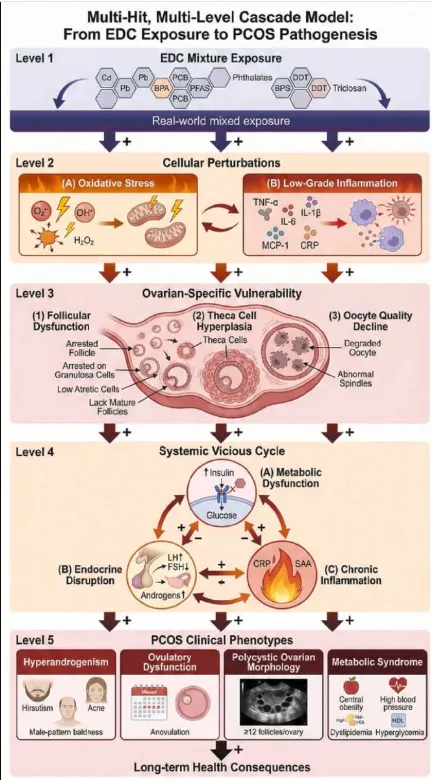
- Endocrine-disrupting chemicals and polycystic ovary syndrome: A systems toxicology perspective on mechanistic pathways
PCOS is being renamed to PMOS. (Polyendocrine metabolic ovarian syndrome)
The change comes from experts that say the old name was misleading, stating that it inaccurately suggested ovarian cysts as a defining feature.
Experts say the relabelling of the condition from ‘polycystic ovary syndrome’ to ‘polyendocrine metabolic ovarian syndrome’ is much more scientifically accurate.
Following a global initiative by academics, clinicians and patient organisations, polycystic ovary syndrome (PCOS) is to be renamed polyendocrine metabolic ovarian syndrome (PMOS) to reflect the multifaceted, complex nature of the condition.
Indeed, despite the previous, long-standing name, the NHS PCOS information page says that one of the three main features of the condition – polycystic ovaries – is when ‘your ovaries become enlarged and contain many fluid-filled sacs (follicles) that surround the eggs’, but that ‘despite the name, you do not actually have cysts if you have PCOS’
UNDERSTANDING PCOS
The World Health Organisation estimates that while PCOS/PMOS affects 10-13% of reproductive-aged women globally, up to 70% are unaware they have the condition, while the NHS says it likely affects around one in 10 women in the UK, with more than half not having any symptoms.
The hope, then, is that the new name will tackle entrenched misunderstandings of PCOS/PMOS, recognising how differently women can experience the disorder and improving access to the right support in navigating and managing individual symptoms.
 Nisha Patel, MD MS, Dipl of ABOM, CCMS | @DrPlantel
Polyendocrine Metabolic Ovarian Syndrome honestly makes way more sense than Polycystic Ovary Syndrome.
Because this condition was never just about “ovarian cysts” or fertility.
Women with PCOS are at higher risk for: -type 2 diabetes -heart disease -fatty liver disease -sleep apnea -high blood pressure Yet so many women are never properly chttps://x.com/DrPlantelounseled about these risks or referred for appropriate care early enough.
As a cardiometabolic physician, I meet women in their 50s and 60s dealing with advanced disease who tell me: “I wish someone had warned me earlier.”
We minimized PCOS by treating it like a niche reproductive issue instead of the systemic metabolic condition it often is.
Endocrine-disrupting chemicals and polycystic ovary syndrome: A systems toxicology perspective on mechanistic pathways