

PROPERTY TAX DEADLINE EXTENDED TO NOV 29

There are 2 replies in this thread, which has been viewed 276 times. The last post (September 24, 2024 at 3:12 AM) was by FHIST NEWS.

  • MINISTER OF FINANCE MR. Colm Imbert Colm Imbert @ImbertColm Announced that:

    We have extended the deadline for the payment of property tax to November 29, 2024,

    and we have also extended the deadline for delivery by the BIR to property owners of tax assessment notices to October 31, 2024.

    See attached media release and Legal Notice No. 175 of 2024

    Image
    Image
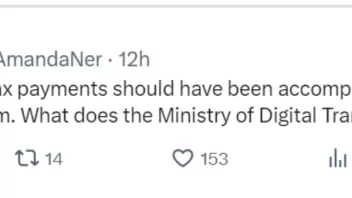
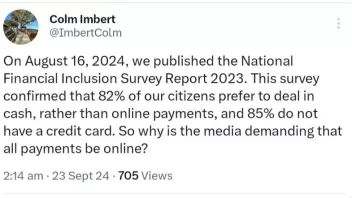
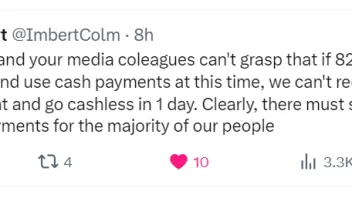
  • Mr. Imbert further responded to concerns regarding an online payment option and criticisms as to it's unavailability as an option

    On Aug 20, 2024 - Minister of Finance Colm Imbert discussed the results of the survey at the launch of the National Financial Inclusion Survey Report 2023

    EXPRESS ARTICLE ON HIS REMARKS ON THE SURVEY'S FINDINGS

    "Most of T&T saving money ...but majority using unsafe options at home"

    New research has found that most of the population is saving money.

    However, the majority of people surveyed are using the unsafe option of saving money at home and not in financial institutions.

    While much of Trinidad and Tobago is embracing advancements in financial technology, a survey by the European Union and the United Nations Capital Development Fund finds there is still a strong preference for cash savings among citizens.

    The survey was conducted among 2,000 nationals over 15 years of age in which geographic coverage, diversity in income levels, financial backgrounds, age, gender, ethnicity and demographic diversity among municipalities were prioritised.

    Minister of Finance Colm Imbert said yesterday, “the research tells us that 75% of our population save to some extent, which means that in the world context, Trinidad and Tobago is a high savings economy. However, an astonishing 82% of this group choose to save their money at home, which is neither safe nor productive.”

    He was speaking at the official launch of the National Financial Inclusion Survey Report (2023) at Tower D, International Waterfront Centre in Port of Spain.

    He said: “Delving deeper into the numbers, what we know now from the survey findings is that the state of financial inclusion in T&T is complex and constantly changing. Financial exclusion is rising, with 25% of households lacking access to formal financial accounts due to barriers such as documentation and high costs.”

    Within that 25%, Imbert said nearly 41% do not have sufficient funds to open and maintain an account, with 13% citing a lack of necessary documentation and 33% believing they do not need an account.

    He added that of the 75% of financially included households, 74% have bank accounts, while 1% have accounts with credit unions, microfinanciers, and other financial institutions.

    “These factors drive the prevailing preference for cash as the primary method for transacting and saving. Despite 88% of individuals having debit card facilities, 63% of all transactions are conducted in cash, exposing individuals to the associated risks of theft, loss, and mishandling,” Imbert said.

    In addition to not having a bank account, the survey found that 85% of citizens do not own a credit card given that 22% were concerned about the high costs, 12% stated the application process was complex, and 34% had limited awareness of the benefits.

    Imbert said seeing this, financial education initiatives should be tailored to different demographic groups through various channels, such as schools, community centres and online platforms.

    While most people live within 15 minutes of a bank branch or an ATM, the distribution of this proximity varies, impacting financial inclusion rates, with some municipalities having greater rates of financial exclusion than other areas, Imbert said.

    “For instance, 33% and 30% of the population in San Fernando and Penal/Debe, respectively, are excluded...It was found that there is insufficient knowledge and ability to understand the terms and conditions, fees, and customer redress processes of formal bank accounts,” he said.

    Imbert also stressed that micro, small and medium enterprises are not immune to financial institutional challenges, with the survey finding that many MSMEs struggle with high borrowing costs, limited access to credit, and a lack of digital payment solutions despite contributing 30% to T&T’s gross domestic product.

    “A staggering 77% of these businesses lack a business bank account. To make matters worse, 86% of these MSMEs exclusively rely on cash transactions, indicating a significant gap in the digital payments ecosystem,” he said.

    The survey also found that the MSMEs’ decisions to accept payments depend on their clientele’s preferences and the need for reliable and secure financial solutions for individuals and businesses.

    Inclusive financial ecosystem

    Imbert said the survey has prompted the Government to develop a comprehensive national financial inclusion strategy with four focus areas:

    • enhancing access to financial services,

    • promoting digital financial education and literacy,

    • strengthening consumer protection, and

    • encouraging innovation and collaboration.

    “Our goal is to create an inclusive financial ecosystem that provides equitable access to financial services for all citizens, regardless of their socioeconomic status,” said Imbert.

    Chief executive officer of Trinidad and Tobago International Financial Centre (TTIFC) John Outridge said one benefit of improving financial inclusion and shifting to cashless is its promotion of economic growth.

    “A general argument is that when more people have access to financial services, they can participate actively in the economy. According to a study published by MasterCard a couple of years ago, excess dependence on cash transactions in the economies of both T&T and Jamaica was slowing economic growth by stimulating informality, increasing fraudulent activities and limiting financial inclusion,” he said.

    TTIFC chairman Richard Young added that in just one year, $25 million has been processed through TTIFC-abled services (cashless services).

    “Implementing digital payments in Government and other financial services is essential for combating corruption and enhancing service performance, as well as financial accountability. Additionally, we have already witnessed its impact on ensuring uninterrupted business operations after the recent global IT service disruption due to the CrowdStrike update. Amid a global event that brought some of the world’s largest corporations to a halt, our Government’s digital payment channels, enabled by TTIFC’s eCashbook system, remained operational,” said Young.

    He said over 50,000 residents now use digital transactions for various Government services, such as the HDC’s e-Pay portal, the Ministry of Trade and Industry’s TTBizLink, the Environmental Management Authority’s Certificate of Environmental Clearance application system as well the updated voucher system of the Judiciary.

  • This threads contains one more post that have been hidden for guests.

Participate now!

Don’t have an account yet? Register yourself now and be a part of our community!