THE TRUTH ABOUT PETROTRIN AND ITS RESTRUCTURING
-
FHIST NEWS -
May 6, 2024 at 9:00 AM -
- Good Governance
-
198 Views -
0 Replies
This is an Op Ed Written By the Hon Stuart Young, MP - Minister Of Energy & Energy Industries Taken from His Personal Social Media Page
Stuart Young
Sunday May 5, 2024
THE TRUTH ABOUT PETROTRIN AND ITS RESTRUCTURING.
Allow me to start by openly declaring that I welcome healthy debate and have never shied away from a good and robust debate, whether it be in the courtrooms as an advocate attorney, on the floor of the parliament (as a temporary opposition senator or as an elected member of parliament), or simply whilst walking throughout the country and engaging persons who have strong opinions on various matters. In my opinion, there are always two non-negotiable requisites for a healthy debate, firstly, mutual respect and secondly, reliance on evidence which is based on the facts.
It has unfortunately become increasingly apparent that a complete disregard for facts and truth by certain public interest commentators comes naturally to the said individuals in furtherance of agendas. Publication of inaccurate and misleading information can be harmful to the public interest. When we rely on the media for information to guide our decision making it is absolutely essential that the media assumes the role of fact checking and ensuring accuracy otherwise these platforms can be used unwittingly for nefarious purposes. The latest offending publication is authored by commentator Ralph Maraj in the Sunday Express Newspaper of April 28th, 2024, under the headline “Shed Your Intellectual Laziness”.
Ralph Maraj once again invents facts in his submission that the Government, and in particular, the Prime Minister, Dr Rowley, was wrong in its/ his decision to restructure Petrotrin and to close the loss-making refinery. As Minister of Energy and Energy Industries the responsibility is mine to once again put the irrefutable facts forward and to correct the record.
Not for the first time Mr Maraj mentions chairmen, board members and reports which allegedly advised the government against closing the refinery and he does this without being able to point to a single item of fact in support of these assertion. He cannot identify a single chairman, or board, or report, in support of his frequent assertions.
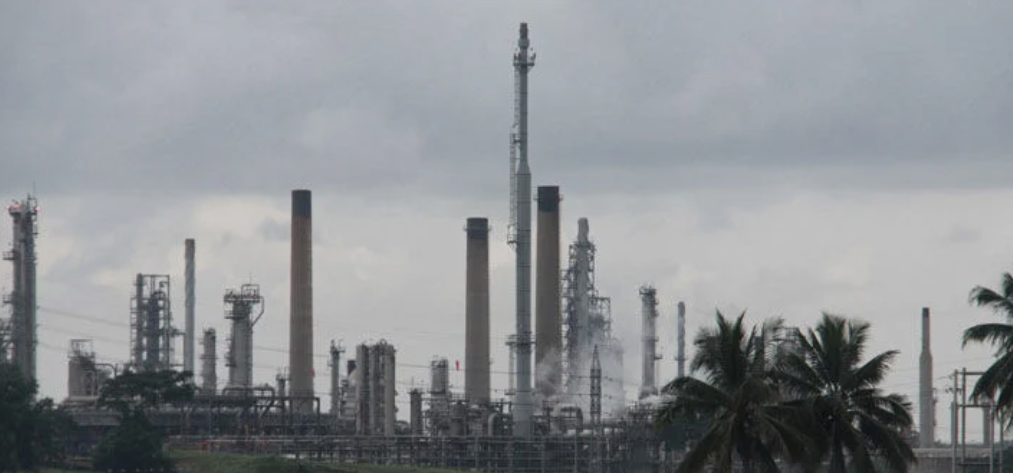
It is an irrefutable fact that Petrotrin was restructured. Petrotrin still exists as a legal entity, its main business is holding various legacy assets; however, its original operations were restructured. Trinidad Petroleum Holdings Limited (TPHL) was incorporated as a holding company with Petrotrin, itself, as one of its subsidiaries. The exploration and production operations were restructured into the successful company Heritage Petroleum Company Limited. The provision of refined fuel products was taken on by Paria Fuel Trading Company Limited (Paria) which has successfully imported refined products (e.g. gasoline, diesel, aviation fuel etc) for the domestic market and for sale throughout the region. The refinery was placed into Guaracara Refining Company Limited, a subsidiary formed to preserve the refinery and to provide utility services to Paria.
This restructuring was actually conducted in 2018 by the then Chairman of Petrotrin, Mr Wilfred Espinet and his board in conjunction with the decision making of the Cabinet. The board was fully involved at every step of the way in the restructuring of Petrotrin and advising the Cabinet. The decision of shutting down the refinery was a Cabinet decision. It is also an irrefutable fact that the shutting down of the refinery and the restructuring of Petrotrin’s operations averted a major economic crisis for the Treasury and the country at large.
Upon coming into office in 2015 the government was confronted with a major unsustainable financial model and operations at Petrotrin. In 2014, Petrotrin registered a loss of $361.3 million and in 2015 its loss was $1.2 billion.
The country had seen a decline in its total domestic oil production from approximately 144,000 barrels of oil per day (bopd) in 2005 to 98,000 bopd in 2010 to 78,600 bopd in 2015. Of this, Petrotrin’s own production of oil declined from approximately 64,000 bopd in 2006 to 42,000 bopd in 2016. It now stands at approximately 35,000 bopd. Our mature fields were clearly on a decline and this crude oil was the input into the Petrotrin refinery which was constructed to refine 175,000 bopd. This meant that Petrotrin was required to import approximately 120,000 bopd to maximise output at the refinery. This component of imported crude oil was sourced on the international open market at prices set by the global oil markets. It should be appreciated that the purchase of all imported crude was required to be done in US dollars. The declining oil production in Trinidad and Tobago had led to the increasing costs of importing crude for refining at Petrotrin. All analyses show that more often than not, this resulted in losses of US $5-$7 a barrel of refined product.
Added to the unfavourable marketing arrangements for crude, the inefficient costs of lifting barrels of oil at Petrotrin had made the company very uncompetitive.
In 2016, Petrotrin registered a loss of $4.3 billion which meant that it had incurred cumulative losses of approximately $5.9 billion in a three year period. By the end of 2016 the Government had done a preliminary assessment of Petrotrin. It was concerned about its trajectory and in particular the effects that it was threatening to have on the Treasury and the country’s sovereign rating. A decline of our sovereign rating would affect the Government’s ability to borrow and the interest rates that its borrowings would be subjected to. So critical was the declining state of Petrotrin and the on-going demands being made by the OWTU union for increases that the Prime Minister, addressed the nation in early January 2017 on the threat that Petrotrin posed to the country and its well-being.
In February 2017, the Cabinet appointed a Team to conduct a review of the operations of Petrotrin and to make recommendations for its restructuring. The team comprised of Mr Selwyn Lashley, as Chairman, Ms Helen Drayton, Professor Chanrabhand Sharma (who subsequently recused himself due to a potential conflict), Mr Robert Riley, Mr Wilfred Espinet, Mr Gregory Marchan (representative of the OWTU) and Mr David Abdulah (representative of the OWTU). The Lashley committee as it came to be known submitted its report dated June 01, 2017 to the Cabinet and this report was subsequently laid in Parliament.
This report concluded that all was far from well at Petrotrin and highlighted its financial difficulties, the inefficiencies that it was facing in its refinery operations which were losing hundreds of millions of dollars, the concerns of asset integrity, the looming bullet payment of US $850 million which had to be paid in August 2019. There were further difficulties associated with servicing another US $750 million debt, the increasing burden of short term debt (the majority of which was being used to purchase crude oil for input into the refinery) and its declining oil production. Interestingly enough, none of these pertinent and well known facts ever from any part of the analyses, fulminations and castigations of the government frequently presented by Mr Maraj. He always talks about the refinery as though it operated in a vacuum of love and affection.
The terms of reference and work done by this Lashley team was limited in nature and was always meant to provide an initial independent high level analysis of the state of Petrotrin. Their conclusion was very worrying and required immediate action which included a deeper dive into Petrotrin’s operations to ascertain more details and to come up with options to avoid Petrotrin’s poor state having a contagion effect on the country’s economy.
Based on this situation, the Government, and in particular, the standing energy sub-cabinet committee recognised that an urgent intervention into Petrotrin was necessary. The Government appointed a new board of directors with specialist skills led by Mr Wilfred Espinet an experienced businessman who had successfully restructured companies and their operations in complex situations before including, Trinidad Cement Limited. The new board was mandated to assess Petrotrin and to come back to the Cabinet with its recommendations including, importantly, a proposal to deal with the US $850 million (TT $5.8 billion) bullet payment due in August 2019 and to do so without recourse to the Minister of Finance having to liquidate same and without the provision of a government guarantee. The board hired a number of consultants and industry experts all of whom concluded that Petrotrin was in a dire position and at minimum it was threatening to downgrade the country’s sovereign rating.
In 2017/ 2018, to add to the operational woes, Petrotrin’s auditors insisted that cumulative losses that were being carried forward for tax purposes to the tune of approximately $5 billion had to be written off, this would have had detrimental effects on Petrotrin’s financial standing and affected its solvency threatening to result in triggers on payment of its debts, including the US $850 million and US $750 million debts. The continued need to import crude oil was being supported by short term US dollar loans which required government support. By the time the decision was taken to shut down the refinery these short term US dollar loans totalled approximately US $450 million. These US dollar short term loans continue to be carried up to today’s date totalling approximately US $402 million (TT$2.77 billion).
The Espinet led board and its advisors, met regularly with a sub-committee of the Cabinet chaired by the Prime Minister and they also met with the full Cabinet on occasions as they worked through the various options available for the restructuring of Petrotrin. The Cabinet was advised that to continue without any changes and in particular, to continue operating the refinery in the manner it was being operated with the high costs of production and negative projections would lead to Petrotrin continuing to incur losses at an average of over $2 billion per annum. In 2017 Petrotrin declared another loss of $2.4 billion in addition to defaulting on its statutory payments of royalties and taxes.
Eventually the board submitted to Cabinet that the only way that it was possible to refinance the US $850 million loan without a government guarantee was to go to the market with a restructured company that separated exploration and production into a separate company freeing it of the financial burdens of the refinery. It was also submitted that it was prudent to shut the refinery down and import fuels as the refinery was sinking Petrotrin for the reasons stated above. After much analysis, and deliberation, the Cabinet gave the board the green light to proceed and Petrotrin was restructured with the workers being paid off approximately $2.7 billion in cash, along with a Cabinet decision to provide land to workers from the land bank of Petrotrin. The restructured companies were also able to secure a refinancing of the US $850 million debt without a government guarantee which prevented the financial fall out to the Treasury and country that would have taken place had the restructuring not taken place.
The root of the problem which resulted in the refinery being closed was the unavailability of sufficient crude from Petrotrin’s sources this made the refining business largely dependent on imported crude. Added to these unsustainable costs, Petrotrin’s lifting cost per barrel of oil was inefficient and uncompetitive, it was costing significantly more to lift each barrel of oil than other exploration and production companies. Petrotrin’s exploration and production operations were inefficient and added to the high cost of running the refinery as the input cost to the refinery.
The refinery was a loss-making enterprise that was sinking Petrotrin and threatened to bankrupt Trinidad and Tobago if it defaulted on its payment of the US $850 million debt in August 2019 which would have also triggered a call on the US $750 million debt at the same time, as well as, the US $450 million short term debt. This would have required the Minister of Finance to have to find US $2.050 billion (TT$14.145 billion) to pay off these debts which was not available. In turn there is little doubt that Trinidad and Tobago would have had to turn to the IMF for this money as well as faced downgrades and possible cross default calls on sovereign debt which would have definitely placed us in the hands of the IMF.
It is easy for persons who live in a fantasy to say that the refinery should not have been shut down and to ignore these hard and irrefutable facts that the Government had to face, to save Trinidad and Tobago, from an IMF programme. It cannot be left to those opposed to the Government who object to the policy of restructuring as carried out to try to rewrite history by putting forward false narratives based on disinformation and untruths. The reality is that the only reasonable option that was available to a responsible government that was concerned about the well-being of the country was to get out of the refining business and to restructure Petrotrin in the manner that we did. A very difficult decision to have taken but a necessary one which allowed us to continue to manage our own affairs without turning to the IMF.
The restructuring of Petrotrin and closure of the refinery has been a success. Not only did we avoid calls on the treasury to make payments of the long and short term US dollar debt, we also managed to secure refinancing of the US $850 million debt, not once but twice, at competitive rates of interest and without any government guarantee.
The newly formed companies of Heritage and Paria have also been successful, a fact that is often conveniently ignored by Ralph Maraj and others opposed to the government. For the period FY2019 through March 2024, Heritage has made $40.3 billion in revenue, paid $12.6 billion in taxes and royalties, and made a profit of $6.5 billion. Heritage has also paid TPHL $1 billion in dividends. For the same time period, Paria has made $52.6 billion in revenue, paid $0.9 billion in taxes, and made a profit of $1.3 billion. These results are indicative of the benefits of the restructuring exercise that this Government undertook.
These irrefutable statements of facts are not associated with any laziness or lack of intellect. Any unbiased assessment of this major business turnaround resulting in the removal of a loss-making refining operation and leading to the success of Paria and Heritage whilst keeping the refinery in a preserved state would conclude that it was appropriate to restructure Petrotrin and to shut the refinery.
It is important to note that the refinery is being preserved and that the Government has consistently indicated and invited those who may be interested in restarting it to provide their proposals for doing so. A prerequisite to the refinery’s restart is an operator that has a source of crude, the wherewithal to restart the refining and the financial ability to underwrite the costs associated with supplying the crude and paying for all costs associated with a safe restart. Government has very carefully kept the door open.
I have taken the time to provide this factually accurate op-Ed to ensure that those who seek the truth and facts are fairly provided with same. Mr Maraj and others who pretend to be concerned about Trinidad and Tobago would do well to be honest in their contributions and by respect the public enough to not attempt to mislead them.
Stuart R. Young, M.P.
Minister of Energy and Energy Industries and Minister in the Office of the Prime Minister
May 3, 2024
CITATION: Stuart R. Young, M.P. (From His Personal Social Media FaceBook Page)