World's First Ovarian Cancer Vaccine Being Developed
-
FHIST NEWS -
October 4, 2024 at 9:39 AM -
- Health News
-
479 Views -
0 Replies

- World's first ovarian cancer vaccine being developed in UK 'could wipe out the disease'
- Ovarian Cancer
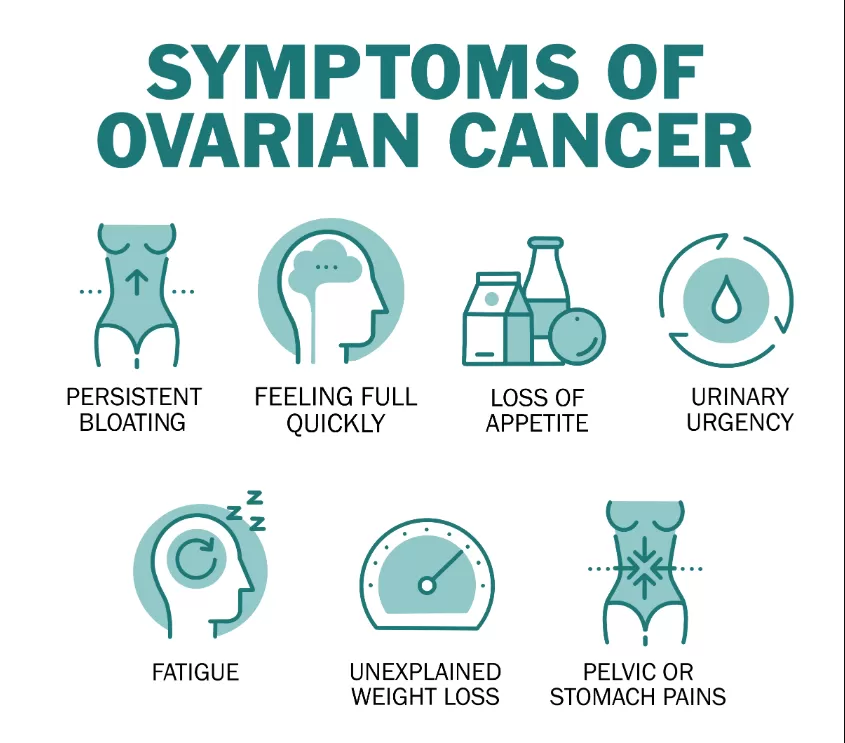
- Common symptoms of ovarian cancer include:
- Less common symptoms of ovarian cancer:
- What if ovarian cancer symptoms persist?
World's first ovarian cancer vaccine being developed in UK 'could wipe out the disease'
The world's first ovarian cancer vaccine could wipe the disease out, researchers have said.
Experts hope the ovarian cancer jab could work in a similar way to the human papillomavirus (HPV) vaccine, which is on track to stamp out cervical cancer
OvarianVax is a vaccine that teaches the immune system to recognise and attack the earliest stages of ovarian cancer.
It's being developed by scientists at the University of Oxford.
The hope is that women could receive the jab preventatively on the NHS with the goal of eradicating the disease.
Experts have suggested it could work in a similar way to the human papillomavirus (HPV) jab, which is on track to stamp out cervical cancer.
Professor Ahmed Ahmed and his team at the ovarian cancer cell laboratory at MRC Weatherall Institute of Molecular Medicine at the university are working to identify cellular targets for the vaccine.
They will establish which proteins on the surface of early-stage ovarian cancer cells are best recognised by the immune system and how effectively the vaccine kills models of the disease in a lab.
Then they can take it to human clinical trials with people who have BRCA gene mutations - which massively increase the risk of ovarian cancer - and healthy women too.
Cancer Research UK is funding the study with up to £600,000 over the next three years.
Asked if ovarian cancer could be wiped out with the new jab, Professor Ahmed said: "Absolutely - that would be the aim.
"We still have a long way to go but it is a really exciting time. I'm very optimistic myself."
Presently, there is no screening test for ovarian cancer, which is often diagnosed late because symptoms like bloating and no appetite can be vague.
Women with BRCA mutations, such as actress Angelina Jolie, are known to be at high risk.
Almost 45% of people with an altered BRCA1 gene and almost 20% with an altered BRCA2 gene will develop ovarian cancer by the age of 80, compared with just 2% in the general population.
Currently, women with BRCA1/2 mutations are recommended to have their ovaries removed by the age of 35, which means they go through early menopause and cannot have children in the future.
There are around 7,500 new ovarian cancer cases every year in the UK, with BRCA mutations accounting for around 5-15% of these.
Professor Ahmed said BRCA mutation carriers could benefit greatly from the new vaccine because "they wouldn't then have to have their ovaries removed".
Ovarian Cancer
The ovaries, located on both sides of the uterus, produce and release eggs, as well as female hormones. Ovarian cancer occurs when cancerous cells develop in the ovaries.
There are several types of ovarian cancer:
- Epithelial ovarian cancer is the most common type. Cancer develops on the ovaries' surface in the epithelial cells or from the fallopian tube.
- Familial breast-ovarian cancer syndrome is an inherited condition that can cause ovarian or breast cancer.
- Germ cell ovarian cancer occurs when cancerous cells develop in the cells that form the eggs in the ovaries.
- Stromal cell ovarian cancer starts in the cells that produce female hormones and hold ovarian tissues together.
Studies show that women with ovarian cancer have improved outcomes when they receive treatment from a gynecologic oncologist at a high-volume medical center — such as Weill Cornell Medical Center.
Our expert gynecologic oncologists care for patients compassionately, offering the best possible chance for cure with the best possible quality of life. Our team focuses on decreasing toxicity and protecting quality of life with minimally invasive and fertility-sparing surgical techniques, as well as sentinel lymph node biopsies.
Ovarian cancer patients find comfort in our personalized, holistic, and warm approach to care. In addition to access to experts at a leading academic medical center, our patients also benefit from greater access to their attending physician, video visits, e-message, flexible scheduling, and collaborative care with a wide range of specialists.
Ovarian Cancer Prevention and Screening
Ovarian Cancer Risk Factors
Studies show that women who are obese, have a family history of cancer, have certain genetic mutations (including BRCA 1 and BRCA 2 gene mutations), had children after age 35 or never carried a pregnancy to term, used in vitro fertilization (IVF), or took hormone therapy after menopause have a higher risk for ovarian cancer.
Prevention Strategies
Women can reduce their risk for ovarian cancer by achieving and maintaining a healthy weight, staying active, and not taking hormone therapy after menopause. Women with a family history of cancer may want to discuss oral contraceptives and genetic testing.
Ovarian Cancer Screening
There is currently no effective screen for ovarian cancer. Prompt recognition and evaluation of suspicious symptoms is essential to avoid delays in diagnosing the disease.
Ovarian Cancer Symptoms
Ovarian cancer was often referred to as the “silent killer” because it was thought that there were no symptoms until the disease was widespread and at an advanced stage. Fortunately, recent studies show that this is untrue.
Women with early-stage ovarian cancer often experience:
- Bloating
- Abdominal or pelvic pain
- Feeling full quickly
- Difficulty eating
- A frequent or urgent need to urinate
Women who experience these symptoms daily for more than two weeks should consult with their gynecologist for an examination.
How Ovarian Cancer Is Diagnosed
Diagnostic Tests
When evaluating a women for ovarian cancer, physicians perform a general physical and pelvic exam. In addition, blood tests may be ordered. Finally, a surgical assessment may be recommended to confirm the diagnosis and aid in staging the disease.
Imaging and Staging
Several imaging tests help physicians diagnose ovarian cancer, as well as determine the type, stage, and extent of disease. Imaging tests may include a transvaginal ultrasound, computed tomography (CT) scan, and other tests.
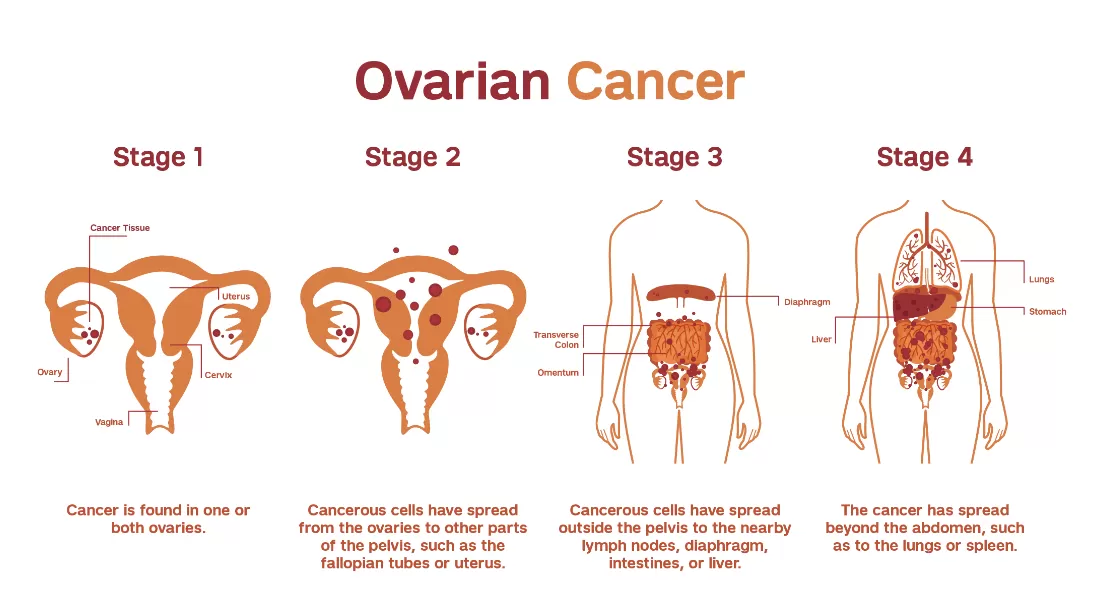
- Stage I: Cancer is found in one or both ovaries. Cancer cells may also be found in fluid collected from the abdomen.
- Stage II: Cancerous cells have spread from the ovaries to other parts of the pelvis, such as the fallopian tubes or uterus.
- Stage III: Cancerous cells have spread outside the pelvis to the nearby lymph nodes, diaphragm, intestines, or liver.
- Stage IV: The cancer has spread beyond the abdomen, often to the lungs or spleen.
Ovarian Cancer Treatment Options
Gynecologic oncologists personalize treatment depending on many factors, including type, stage, and fertility goals.
Individual treatment plans may include a combination of surgery, chemotherapy, radiation therapy, and other treatment options. Physicians work closely with patients to minimize side effects and promote greater comfort throughout treatment.
Surgical Approaches
Surgery is the first step in treating ovarian cancer. Minimally invasive surgical techniques may be appropriate for certain patients.
The goal of surgery is to remove as many cancerous cells as possible. Surgical options include:
- Salpingo-oophorectomy is the surgical removal of the ovaries and fallopian tubes.
- Hysterectomy is the surgical removal of the uterus and cervix.
- Debulking is the surgical removal of any additional cancerous cells and tumors.
Chemotherapy
Chemotherapy is the use of drugs to kill cancerous cells. To limit side effects and damage to healthy cells, ovarian cancer patients are usually given chemotherapy in cycles with several rest periods. Chemotherapy may be recommended before or after surgery, or both.
Most women receive intravenous chemotherapy (injected into a vein). Our expert gynecologic oncologists determine the most effective combination of drugs for each patient, depending on a variety of factors.
Hormone Therapy
Some types of ovarian cancers can be treated with hormone therapy. This treatment blocks receptors and inhibits female hormones to prevent ovarian cancer cells from getting or using the hormones needed to grow and multiply. Hormone therapy is usually given in the form of pills.
Immunotherapy
Immunotherapy is the use of medications to stimulate your immune system to recognize and destroy cancer cells more effectively. Your physician determines the best immunotherapy medications and timing for taking them.
With care from a highly trained gynecologic oncologist, immunotherapy can be an integral part of your ovarian cancer treatment.
Fertility Preservation
Gynecologic oncologists work closely with the expert reproductive medicine specialists to offer ovarian cancer patients options to preserve fertility, including:
- For patients with early stage ovarian cancer, it may be possible to surgically treat ovarian cancer by removing only one ovary and fallopian tube.
- Egg and embryo freezing.
- Preservation of ovarian tissue.
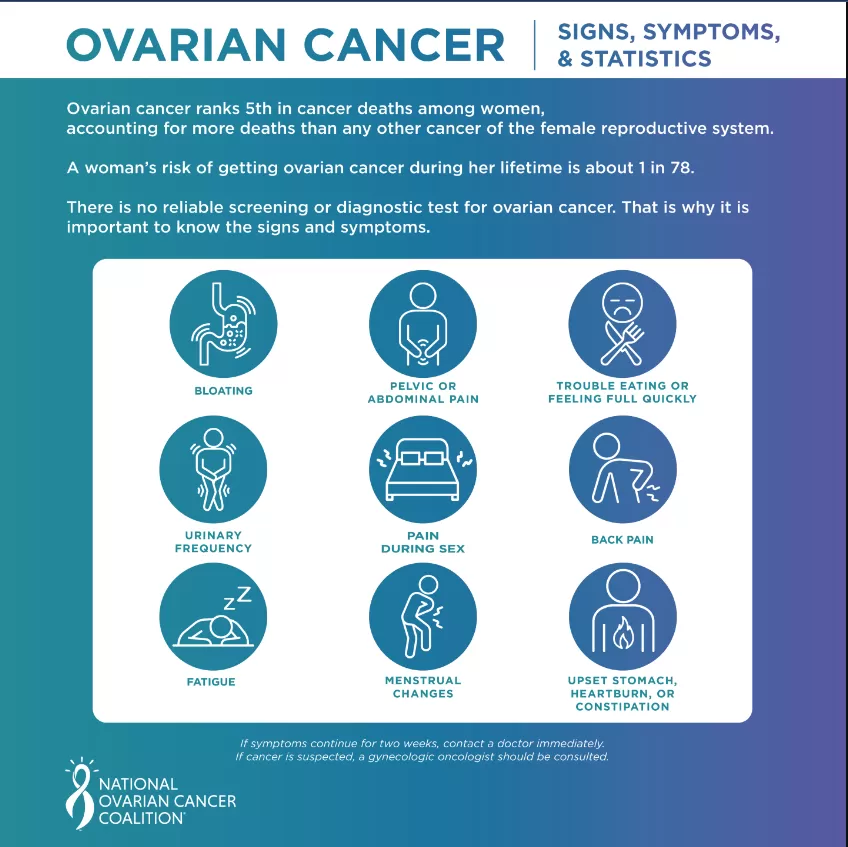
Common symptoms of ovarian cancer include:
 Bloating
- You may notice swelling in the lower pelvis or abdomen and clothes around the waist may feel tighter than normal
 Pelvic or abdominal pain
- Pain in abdomen, back or pelvis
 Trouble eating or feeling full quickly
- Feeling full after eating only a few bites or loss of appetite
Urinary frequency
- Feeling the need to urinate more frequently
Less common symptoms of ovarian cancer:
 Pain during sex
- Discomfort or pain during sex
 Back pain
- Pain or discomfort in the lower back
 Fatigue
- Feeling more tired than usual and more often
 Menstrual changes
- Changes to your monthly menstrual cycle including additional bleeding or vaginal discharge
 Upset stomach, heartburn, or constipation
- This may include diarrhea or changes in bowel habits such as urgency or pain
What if ovarian cancer symptoms persist?
It is important to pay attention to your body and know what is normal for you. If symptoms do not go away within two weeks following normal interventions such as laxatives, rest, or changing diet and exercise, contact a physician immediately. There is no effective screening test for ovarian cancer. That is why it is important to know the signs and symptoms and report them to your doctor.
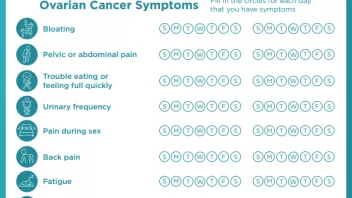
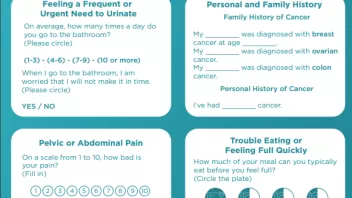
TRACK YOUR SYMPTOMS OVER A TWO WEEK TIMEFRAME USING A SYMPTON DIARY YOU CAN DOWNLOAD IT FROM THE NATIONAL OVARIAN CANCER COALITION WEBSITE