From Insurrection to Isolation: The Psychological Evolution of Terror in Trinidad and Tobago
-
Danger Close -
July 27, 2026 at 3:49 PM -
- OPINION
-
57 Views -
0 Replies
From Insurrection to Isolation: The Psychological Evolution of Terror in Trinidad and Tobago
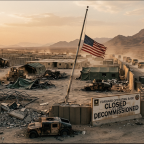
1990 TRAUMA PROFILE VS. 2026 SOE ANXIETY PROFILE
The collective psyche of Trinidad and Tobago is trapped in a continuous loop of trauma, shifting over thirty-six years from the explosive shock of an acute insurrection to the slow, suffocating erosion of modern emergency rule. To understand the current mental state of the nation, one must trace the psychological trajectory from the sharp terror of July 27, 1990, to the chronic, normalized anxieties of the 2026 States of Emergency (SOEs).
1. The Shock of 1990: Acute, Ruptured Safety
The trauma of the 1990 attempted coup was sudden, violent, and highly localized. For a society unaccustomed to political warfare, the sight of the Red House under fire was a psychological rupture. It shattered the foundational myth of island exceptionalism—the belief that "God is a Trini" and that our democratic systems were bulletproof.
The psychological impact on citizens was characterized by classic Post-Traumatic Stress Disorder (PTSD) patterns: acute fear of institutional collapse, hyper-arousal at the sound of sudden loud noises, and deep grief for the violated sanctity of the capital city. However, because the event had a clear beginning, middle, and end, the nation’s coping mechanism was focused on reconstruction. Citizens sought to heal by re-establishing the status quo, even if the underlying scars were deeply buried by successive governments.
2. The Anxiety of 2026: Chronic, Normalized Suppression
In stark contrast, the psychological climate of 2026 is defined not by a sudden explosion, but by a slow, creeping paralysis. Under rolling States of Emergency and prolonged Presidential Detention Orders (PDOs), the threat is no longer an isolated group of insurgents; it is an omnipresent, systemic failure of national security.
The modern anxiety is chronic. Citizens live under a perpetual state of hyper-vigilance, locked behind domestic fortresses, terrified of home invasions, and constantly negotiating their lives around state-enforced restrictions on civil liberties. The trauma is no longer event-driven; it is environmental. When a government uses extraordinary police powers as a permanent substitute for sustainable policing, it conditions the population to accept a baseline level of subjugation. The psychological cost is widespread learned helplessness—a collective state of exhaustion where citizens stop demanding structural reform and simply focus on daily survival.
3. The Dangerous Synthesis: Amnesia and Authority
The intersection of these two historical eras creates a volatile psychological phenomenon. By actively ignoring the anniversary and lessons of the 1990 coup while simultaneously lauding the heavy-handed control of modern SOEs, the current political directorate exploits the nation’s unhealed trauma.
The administration plays on the public’s deep-seated fear of chaos (originally seeded in 1990) to justify authoritarian overreach in 2026. The population, weary of relentless violent crime, is gaslit into believing that trading constitutional freedoms for a temporary, state-enforced quietude is a fair bargain. This creates a deeply fractured national identity: a society that remains psychologically haunted by the day its democracy was violently attacked, even as it quietly watches that same democracy be structurally dismantled from within.